On Riding the Waves of Liminality
I woke up to the sensation of my body sliding up and down along the narrow single bed.
Up and down. Up and down.
Up — my head slid towards the wall and softly landed against the wood veneer panelling behind my lopsided pillow. Down — my feet slid in the opposite direction and stopped abruptly when they hit the closet at the foot of my bed.
How was I supposed to get back to sleep?
Up and down. Up and down.
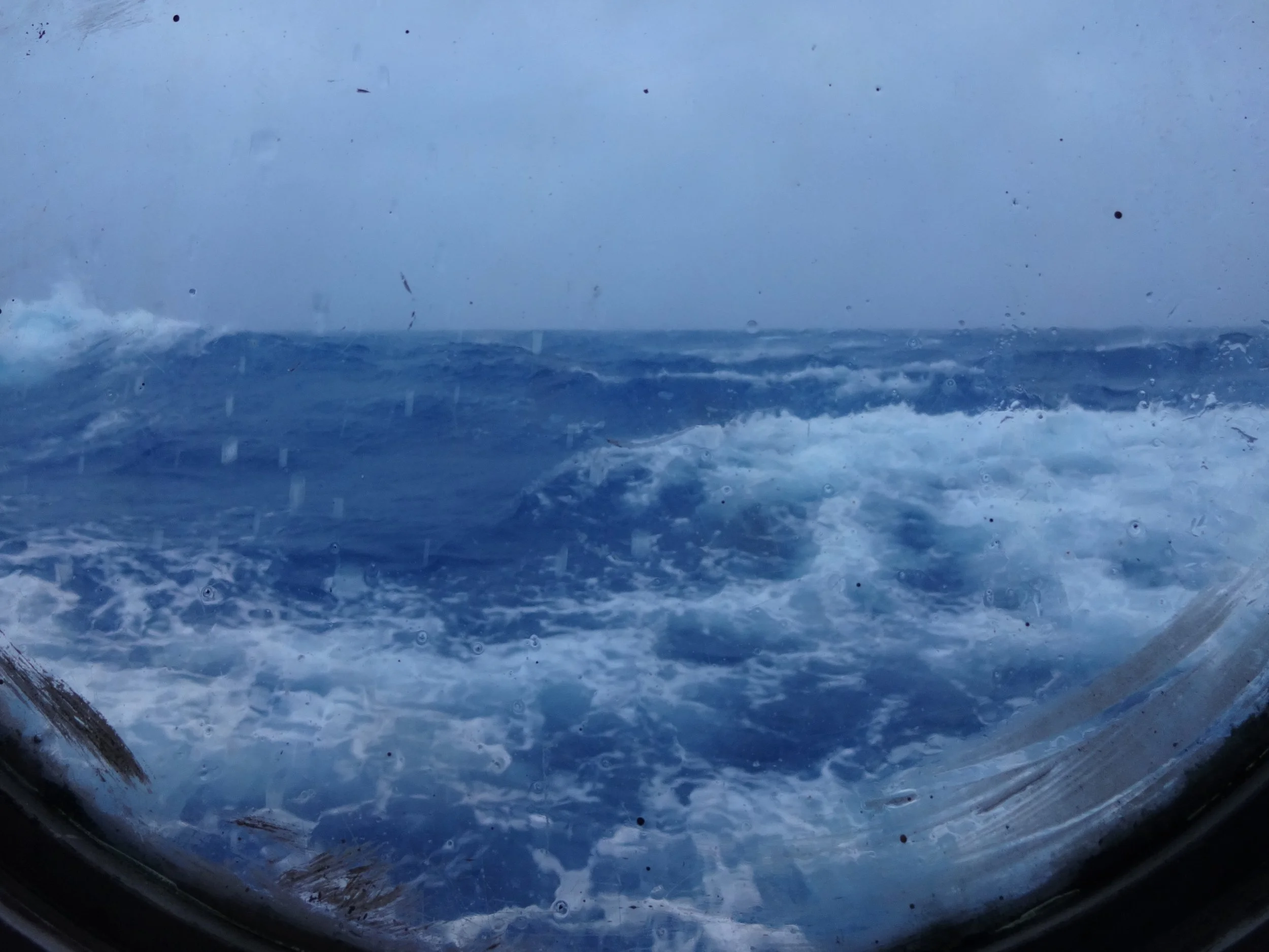
I got out of bed and stumbled to the tiny porthole that gave me my only view of the outside world. It was completely dark. Black. Nothing. A few inches of glass between me and the surging sea.
My body suddenly lurched towards the tiny bathroom as the ship hit a rolling wave. The safest place for me to be was back in bed, even if it was uncomfortable.
Up and down. Up and down.
Sleep came eventually.
I was crossing the Drake Passage, one of the world’s most treacherous bodies of water, where the Pacific, Atlantic, and Southern Oceans come together to yell at each other in their native language: turbulence. A liminal space in the most physical sense.
Looking back, the whole experience was a textbook Transition — with a capital ‘T’ because I’m referring to the Bridges Transition Model developed more than three decades ago by organisational consultant and author William Bridges. The Bridges Transitions Model proposes that change occurs in three stages — Endings, the Neutral Zone, and New Beginnings. When I’m going through a major life change, this is one of the first models I reach for to make sense of the experience.
As our ship left Ushuaia and sailed out of the Beagle Channel, we experienced an Ending — at least for the next 10 or 11 days. We celebrated that Ending with champagne and cake, but we were also saying goodbye — to the stability of terra firma, to telephone and internet access, and to a certain level of freedom and privacy.
This Ending was exciting, as Endings often are. But that doesn’t mean that it was comfortable.
Endings occur because we can’t get to where we’re going if we stay where we are.
Within hours, the boredom had kicked in. Darkness had fallen, the sea had picked up, and the wind was howling, so it was no longer safe to walk around on the deck. That meant that 84 passengers were more or less confined to their cabins or the communal lounge and dining area. After the excitement of the departure, we were a strange, lopsided mix of readers, nappers, and just-trying-not-to-throw-up-ers. A few of us were attempting to engage in conversation, but we were quickly running out of things to say and the energy to say it.
Then it was bedtime and — up and down, up and down.
The next day, it was more of the same. I spent most of that day alone in my cabin, listening to music and catching up on sleep.
This was the true liminal space — or what Bridges calls the Neutral Zone. But ‘neutral’ doesn’t quite capture it. We were ‘betwixt and between’, neither here nor there — a bit bored and mildly excited, a bit tired and slightly wired, a bit hungry and faintly nauseous.
Our tour leaders were all marine scientists who enthusiastically gave lectures to share their work with us, but the soporific movement of the ship made it very difficult to concentrate. The only interesting thing that happened was when I briefly spied a pod of dolphins swimming alongside our ship. But that moment was short-lived.
We were all in a state of suspension — waiting for the New Beginning to emerge. It felt like boredom and mild frustration to me, but in hindsight it was preparation.
On the third day, I’d managed to shove down some breakfast and was sitting in the lounge area, staring blankly at the sea, when I saw something through one of the large rectangular windows.
Was it a bird? Maybe an albatross? This wasn’t all that remarkable, except that we hadn’t seen any sea birds since exiting the Beagle Channel. After 36 hours of nothing, a lone bird was something that made you sit up and pay attention.
And I’m glad I was paying attention, because not long after that we saw our first icebergs. ICEBERGS!
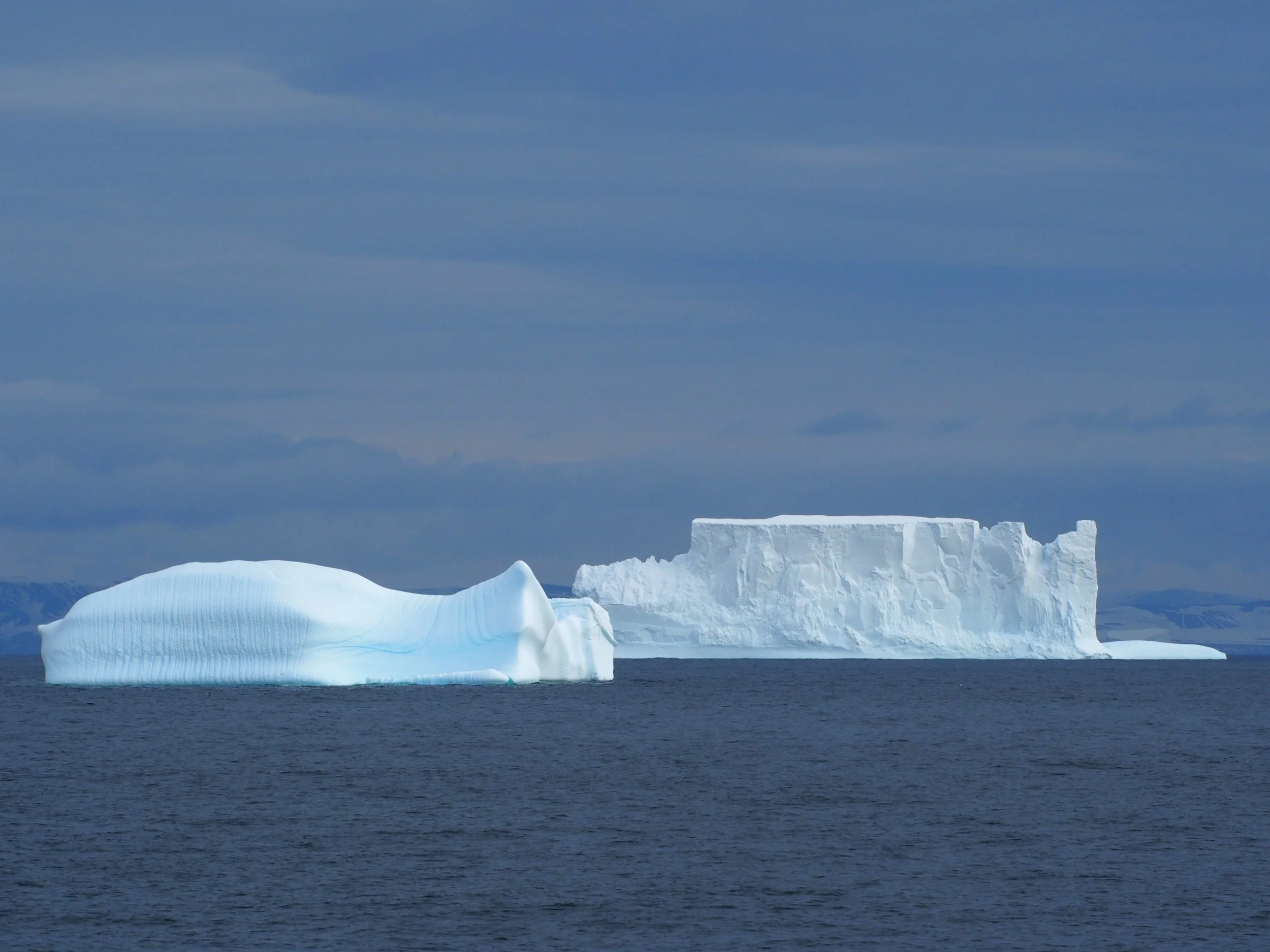
No, this was not our Titanic moment, thank goodness. We were seeing the first signs that we were approaching the Antarctic Peninsula — our New Beginning.
It was as if the White Continent had sent a welcoming committee out to greet us — to let us know we were nearly there.
What I recall so vividly from this time was how quickly we all shifted gears. Suddenly, the camera gear that I’d put aside became utterly compelling: Had I installed the correct lenses? Charged the batteries? Packed some spare memory cards? I dutifully checked and rechecked my waterproof clothing to make sure that I was ready for the first excursion, when we would all disembark the ship into Zodiac cruise boats to explore the seventh continent at closer range.
And then we were there. Finally.
After passing Argentina’s Cámara Base, we boarded the Zodiacs and made our first landing on Half Moon Island. Here we saw penguins and seals who were all blissfully unconcerned with our presence. And, of course, there were more icebergs.
Within a day, we had settled into our new routine. The remainder of our journey wasn’t without its challenges, but we had adapted to our new conditions — to the communal meals with our adopted families of fellow travellers, to the necessity of holding the railings when moving around the ship, to the disinfection routine for disembarking and reembarking the ship.
The New Beginning had given way to the ‘new normal’.
As it turns out, this liminal space was doing double duty.
A few days into the trip, I caught a virus from a fellow passenger and temporarily lost my voice. The symbolism was not lost on me. Being in that liminal space — away from everything I held as familiar, in one of the most remote locations on the planet — well, it facilitated a loosening of my identity that allowed me to realise how I’d lost my voice in my professional life as well. One month later, I resigned from my job.
Ten years on, my perspective on liminal spaces has changed. Once something to be endured, I now see them as periods that hold real potential for growth and renewal.
How about you? What might be possible if you were to treat uncertainty as a liminal space — somewhere between an ending and a new beginning?